Design
Most founders have had at least one bad experience working with a designer. Sometimes more than one.
- The work doesn’t land.
- Progress feels slow.
- Revisions multiply.
- Frustration builds.
It’s easy to assume the designer is the problem.
In reality, design projects usually fail for reasons that have very little to do with talent and a lot to do with how the work is set up.
Design Isn’t Decoration
One of the most common disconnects happens at the very beginning.
If a designer is hired only to make things “look nice,” without being involved in users, goals, or strategy, the outcome will always be surface-level. Visual polish without problem-solving rarely performs well.
This matters because design directly affects how users experience a product. In fact, 88% of online consumers won’t return after a bad user experience. When design decisions aren’t grounded in real problems, the cost shows up not just internally, but in lost users.
Designers aren’t decorators. Real design work exists to solve problems, clarify intent, and support growth. When that role is misunderstood, disappointment is almost guaranteed.
Context Is the Foundation of Good Design
Designers don’t work in isolation and they can’t read minds.
Without clear information about the vision, constraints, audience, and objectives, designers are forced to guess. Guessing leads to misalignment, excessive revisions, and wasted time.
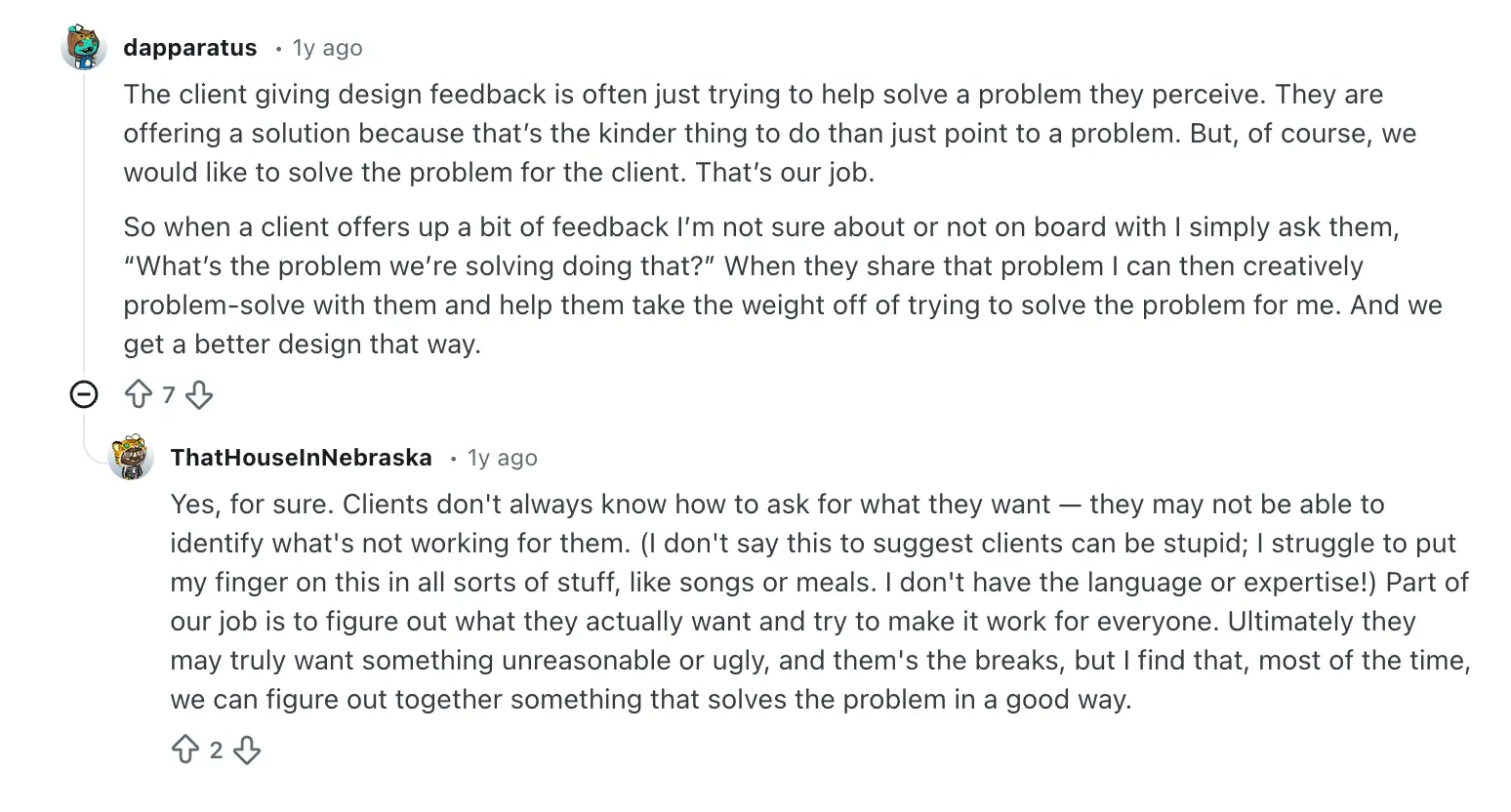
“The client giving design feedback is often just trying to help solve a problem they perceive.”
“When a client offers up feedback I’m not sure about, I ask them, ‘What’s the problem we’re solving by doing that?’”
A brief helps, but context is what turns design from guesswork into intention. When designers understand the underlying problem, feedback stops being about surface changes and starts becoming a shared effort to reach the right outcome.
“Clients don’t always know how to ask for what they want.”
“Part of our job is to figure out what they actually want and try to make it work for everyone.”
Unclear feedback isn’t the problem. Missing context is. When designers help translate instinctive reactions into clear intent, collaboration replaces friction.
Creative Freedom Still Needs Boundaries
“Creative freedom” often sounds like an open invitation, but without direction, it creates confusion.
Creative freedom doesn’t mean unlimited exploration. It means having room to think and test ideas within clear boundaries. When every detail is micromanaged or constantly rejected, the designer’s role shifts from problem-solver to executor.
At that point, design loses its value.
Design Works Best When It Starts Early
Design is not a finishing touch added at the end of a project.
It’s a strategic layer that influences product structure, messaging, usability, and user experience. When design is introduced too late, it’s asked to fix problems it didn’t create and can’t fully solve.
Bringing design in early prevents costly rewrites and rebuilds later.
Process Is Part of the Work
Good design takes time.
Research, exploration, and iteration are not delays. They are the work. Rushing through them leads to results that look acceptable but lack depth and longevity.
If depth is the goal, space must be part of the process.
Speed and Quality Are Not the Same
Moving fast can feel productive, but speed without understanding often sacrifices quality.
A designer who ships quickly without asking questions may deliver something that looks fine on the surface but performs poorly. Thoughtful designers slow down at the right moments to create work that actually lasts.
Undefined Success Creates Endless Revisions
When success isn’t defined, feedback becomes subjective.
If “done” and “good” aren’t clearly agreed on, every iteration feels incomplete. Designers can’t optimize for outcomes that haven’t been articulated.
Clear goals protect both sides and turn feedback into progress instead of noise.

This is where many design projects either gain clarity or start to unravel. When goals aren’t defined early, feedback drifts toward personal taste instead of measurable outcomes. Design becomes subjective not because it is, but because the target was never clearly set.
Too Many Opinions Dilute Direction
Design by committee rarely leads to strong outcomes.
When feedback comes from everyone, direction disappears. Opinions conflict, priorities blur, and momentum stalls. Good design needs trust and a clear decision-maker.
If trust doesn’t exist, the problem isn’t the design. It’s the relationship.
Investment Reflects Priorities
Design quality reflects how much it’s valued.
When design is treated as a cost to minimize, the results usually mirror that mindset. Quality design requires time, focus, and care.
Cheap design often gets revisited.
Good design compounds.
Why Design Gets Blamed
Design is visible and tangible, which makes it an easy target when something feels off.
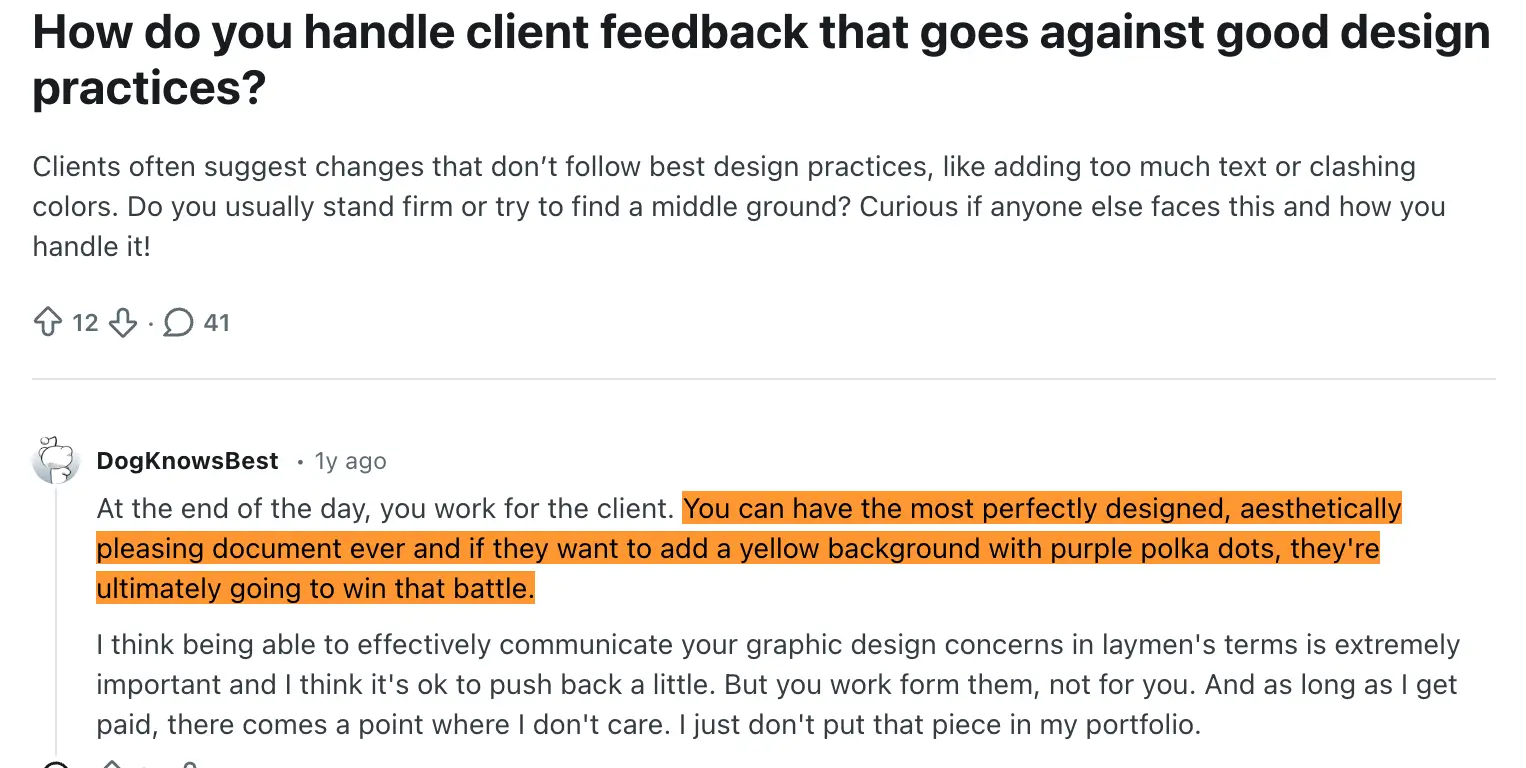
But most design problems are symptoms, not causes. They surface gaps in clarity, alignment, and decision-making that already exist.
Design doesn’t create those issues.
It reveals them.
Final Thought
If a design project feels harder than expected, it doesn’t mean the designer is the problem. It usually means something important wasn’t aligned early enough.
Design simply made it impossible to ignore.
About the Author:

As a blog author at Mykola Designer, I explain how global teams can build high-converting and trust-building websites. In my articles, I combine strategic UI/UX design with expert marketing and no-code development and provide full-scale landing pages, brand identity systems, and SEO/GEO optimization for startups looking to turn concepts into scalable products.
Let’s connect on LinkedIn or X to build awesome projects together.
Share this article: